


Live Sports
Live HD BarryLab
I approached Live Sports as the kind of app you open when the match matters more than the conversation around it. Its focus is straightforward: bringing live sports information to an Android phone, with the experience shaped heavily by the quality of your connection and by how quickly you need to find what is happening. After spending time with it, I found a useful companion for checking sports on the move, although it is not the sort of app I would choose blindly for every viewing situation.
What makes it worth considering is its practical role. You do not need to be sitting in front of a television to keep an eye on a game. A quick check during a commute, a break at work, or while waiting for friends can be enough to stay informed. The trade-off is equally important: a live sports app is only as dependable as the network carrying its updates, so the best experience comes when you treat it as a connected tool rather than a replacement for every other sports service.
How the live experience depends on your connection
The first thing I noticed is that connectivity is not a background detail here; it is part of the product. When the network is responsive, the app feels suited to short, purposeful visits. I can open it, look for the sporting event I care about, and get back to whatever I was doing. That rhythm is more valuable than a crowded interface full of information I did not ask for.
On a strong mobile connection, the appeal is obvious. Live sports are time-sensitive, and even a short delay in loading can make a score check feel pointless if the match has already moved on. The app makes most sense when you are checking in repeatedly rather than trying to build a complete archive of a competition. I would use it before a game starts, during natural pauses, and after an important moment when I want a quick confirmation.
Wi-Fi is naturally more comfortable for longer sessions, especially if you are watching the screen for an extended period or moving through several parts of the app. Mobile data is better suited to brief checks, where the phone is acting as a pocket scoreboard rather than a full viewing setup. That distinction matters because “live sports” can mean different things to different people. If you expect a full broadcast experience, you should compare it with a dedicated streaming service. If you need timely information while away from home, its purpose is easier to understand.
Related News

Why WhatsApp Messenger Still Makes Everyday Communication Feel Easy

Jurassic World: The Game Is the Better Dino Tycoon for Strategic Players

Threads in Real Life: Who Should Join, Lurk, or Leave

How SHEIN Turned Shopping Into an Endless Content Feed

How to Make Fortnite Feel Smarter on Mobile

Should You Switch to Microsoft Outlook on Mobile?
There is also a human side to network dependence. A poor signal can make you wonder whether the event has not updated or whether the app is simply waiting for the connection to catch up. I recommend giving the screen a moment before repeatedly tapping controls. Repeated refresh attempts do not improve a weak signal and can make a short check feel more frustrating than it needs to be.
One practical habit helped me: I open the app before I actually need it. If I know a game is about to begin, checking the app while I still have a stable connection gives me time to locate the relevant area instead of searching during a key moment. This is a small workflow change, but it reduces the pressure that often makes live-score apps feel unreliable.
Short checks work better than passive watching
I found the app most convincing in situations where attention is divided. Imagine waiting for a train while following a match that you cannot watch properly. You may only have a few seconds to check what has changed. In that setting, a focused sports app is more useful than opening a general news service, scrolling through social posts, or searching the web and sorting through unrelated results.
Gallery
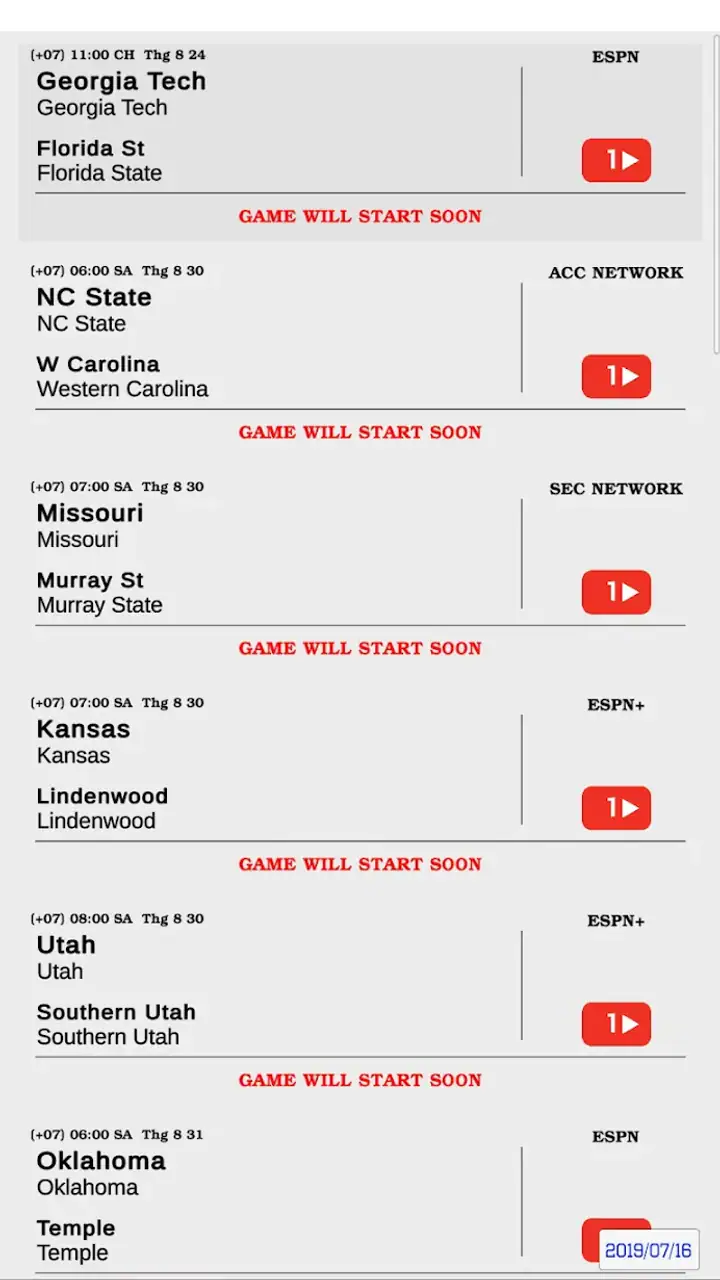
It also fits the “second screen” role. You might be watching a broadcast elsewhere and use your phone to verify another event, follow a separate game, or check what happened while you were away from the television. That does not make it a substitute for a broadcast, but it gives the app a clear place in a wider sports routine.
My advice is to decide what you want before opening it. Are you checking one event, scanning several live fixtures, or trying to follow a broader sports day? The first task suits a quick mobile visit. The last may require more patience and a stronger connection because you are asking the app to become a regular information hub rather than a single-purpose check.
Using it in real mobile situations
The app feels designed for the way people actually use phones: in fragments. I can imagine opening it in a café, at a workplace during a permitted break, or in a crowded room where turning on sound would be inappropriate. That makes the visual side of the experience especially important. Live sports tools need to communicate quickly without demanding a long reading session, and this one is at its best when you approach it with that expectation.
For commuters, the main advantage is convenience. A phone is already in your hand, and a live sports check takes less commitment than finding a television or opening a laptop. However, underground travel, crowded networks, and areas with inconsistent reception can interrupt the experience. I would not make it my sole plan if knowing the result at an exact moment is genuinely important.
For people who follow several sports, the decision is more nuanced. A broad sports app can be helpful because it keeps different interests in one place, but breadth can also mean more searching. If your priority is one particular league or team, a specialist app may offer a more direct route and more tailored alerts. Live Sports is more appealing when you want a general sports companion instead of a narrowly focused club tool.
Parents and families may also find the simple access useful. The app carries an Everyone content rating, so it is positioned for a broad audience rather than a mature niche. That does not mean every sports discussion or external source connected with the wider sports world will suit every child, but the app’s stated age category makes it easier to consider for ordinary family use.
I would be more cautious about using it while driving, cycling, or doing anything that requires full attention. Live updates are never worth creating a safety problem. The sensible use case is when you are stationary or when checking the phone is clearly safe and permitted.
A small routine for better results
My preferred routine is simple. I first connect to the most reliable network available, then open the app a few minutes before the event I care about. I locate the match or competition, leave the app ready, and avoid unnecessary browsing. During the game, I check at natural breaks rather than constantly refreshing. This approach saves attention and makes the app feel more dependable because I am using it for the job it handles best.
Another useful habit is to keep expectations realistic when the phone is under pressure. If several apps are open and the device is struggling, switching repeatedly between them can make a live update feel slower. Closing distractions before an important check is not a special feature of this app, but it is a practical way to make a lightweight sports workflow less messy.
For travelers, I would check the app before leaving a stable Wi-Fi area and then rely on it only when the mobile signal is good. That is not a promise of offline access; it is simply a sensible way to avoid depending on a live service in a place where the network may be unpredictable.
What happens when updates stall
Every connected sports app faces the same awkward moment: the screen appears unchanged, and you need to decide whether the event is genuinely quiet or the connection has stopped delivering updates. This is where patience and a basic recovery routine matter more than fast tapping.
When something looks stale, I first check the phone’s connection by opening another ordinary page or app. If other services are also slow, the problem is probably the network rather than the sports screen. I then wait briefly, return to the event, and try again once. If the rest of the phone works normally but the live information still seems stuck, restarting the app is a reasonable next step.
This recovery process is not glamorous, but it prevents a common mistake: treating every delay as a wrong result. Live information can arrive after a short pause, and making assumptions during that pause is risky. If you are following a close contest, I would cross-check a major result with a trusted alternative before sharing it with friends or making decisions based on it.
That limitation affects how much trust I place in the app. I am comfortable using it for casual awareness and quick personal checks. I would be more careful if I needed an official confirmation for work, reporting, a competition pool, or a moment when accuracy and timing have consequences. In those cases, a league-specific source or established sports broadcaster may be the better choice.
Recovery is also harder when you move between networks. Walking out of a building, switching from Wi-Fi to mobile data, or entering a crowded venue can create a brief interruption. I found it better to wait until the phone settles on the new connection instead of repeatedly closing and reopening everything. If the app remains unresponsive, a clean restart is more useful than continuing to press the same control.
Why network quality changes the feeling of reliability
A connected app can seem excellent one minute and disappointing the next because the surrounding conditions change. This is particularly noticeable with sports, where users judge the experience against events happening in real time. A delay that would be harmless in a weather app can feel significant during the final minutes of a match.
That is why I would not judge Live Sports only by a single session on a strong home network. Its real test is the everyday middle ground: a busy café, a moving commute, or a venue with overloaded mobile service. The app remains useful in those situations, but the user has to participate in the process by choosing when to check, allowing time for updates, and recognizing when a connection problem is affecting the result.
Using less data without losing the point
Because this is a live sports app, network use deserves some thought even when each individual visit feels short. The safest approach is to keep sessions focused. Open the event you want, read the information you need, and leave rather than leaving the app active while you are not looking at it. This is particularly sensible when your mobile plan is limited or when you are traveling.
Wi-Fi is the obvious choice for extended browsing. I would use mobile data for quick checks and avoid turning a simple score update into a long period of unnecessary screen time. If your phone includes system-level data controls, they can help you monitor the app’s behavior over several days without guessing. That gives you a clearer picture of whether your personal habits are light or heavy.
There is a trade-off between freshness and restraint. Checking every few seconds may feel reassuring, but it rarely adds value when the event has not reached a decisive moment. A better pattern is to check around kickoff, halftime, scheduled breaks, and the end, then add occasional checks only when the match is especially important to you.
Battery life follows a similar logic. A short visit is easy to fit into a day; repeatedly waking the phone, keeping the display active, and moving between networks is more demanding. If you are attending a long event, carry a charger or power bank for general phone use rather than assuming any live sports app will be gentle on the battery. The app’s value is greatest when it supports your day instead of becoming the activity that drains your phone.
Privacy-conscious users should also take the normal care they would use with any connected app. I would review the app’s behavior through the phone’s own settings and keep the software updated through the official store. The current version is 6, and the minimum Android requirement is 7.0, so compatibility is relatively broad for people using older Android hardware, though an older phone may still feel slower than a newer one.
Who benefits most from this approach
I think Live Sports is a good fit for someone who wants a free way to check live sports on an Android device without committing to a full subscription-based viewing setup. It is also useful for casual followers who move between sports and want one familiar place to begin. The app has passed the early-adoption stage in a modest but meaningful way, with more than fifty thousand installs and an average rating of 3.7 from around one thousand three hundred ratings.
Those figures suggest a real user base, but they also tell me not to treat the app as universally perfect. The rating is respectable rather than exceptional, which matches my impression: the concept is useful, while the quality of a live session depends on circumstances outside the app as well as on how much detail each user expects.
The developer, Live HD BarryLab, has kept the identity of the product clear through a sports-focused name and presentation. I appreciate that clarity because it reduces the learning curve. Still, people who want deep analysis, extensive historical records, personalized team coverage, or a guaranteed broadcast should look at specialist alternatives before settling here.
How it compares with familiar alternatives
The usual alternatives fall into three groups. General search and news apps are convenient when you need one result, but they can surround that result with unrelated stories, advertisements, or commentary. A dedicated sports app is generally better for repeated live checks because the sports context is already central. Live Sports sits closer to that second group, especially for users who want a general-purpose sports check rather than a single publication’s news feed.
Club and league apps can be stronger when loyalty is narrow. If you care almost exclusively about one team, an official source may provide more relevant schedules, announcements, and team-specific information. The trade-off is that you may need several apps if your interests are spread across different competitions. Live Sports is more convenient for a mixed sports routine, even if it may feel less specialized.
Streaming services are a different category altogether. They are the better choice when watching the actual contest is the priority. Live Sports makes more sense when you are unable to watch, want a quick update, or need a second-screen reference. Confusing those two purposes would be the easiest way to become disappointed with the app.
I also see a difference between this app and social media. Social platforms can be fast, but their updates are mixed with opinions, jokes, spoilers, and posts from accounts you did not intend to follow. A focused sports app offers a calmer starting point for checking what happened. On the other hand, social media may provide richer conversation around a major event, so I would use each for a different reason rather than expecting one to replace the other.
The free price is a meaningful advantage for casual users. You can try it without making a financial commitment, which makes the decision easier if your sports habits change from week to week. The important question is not whether it costs anything, but whether its connected, quick-check style matches what you want. Free access does not automatically make it the best option for someone seeking premium viewing or deep specialization.
My connectivity verdict
After using it as a mobile sports companion, I see Live Sports as most successful when the user understands its boundaries. It is convenient for quick live checks, flexible enough for mixed sports interests, and easy to justify when you want a free Android app rather than a full viewing subscription. The broad Everyone rating also makes it approachable for ordinary household use.
Its main weakness is not something I would hide: the experience can lose its value when the network is weak or when you expect the app to behave like a broadcast platform. Live information needs a connection, and a delayed screen can be frustrating at exactly the moment you care most. Recovery is manageable, but it requires sensible habits such as checking the signal, waiting briefly, and confirming major results elsewhere when accuracy is critical.
I would recommend it to commuters, casual followers, second-screen users, and anyone who wants a free way to keep sports within reach. I would skip it in favor of a specialist or official alternative if your entire routine revolves around one team, if you need detailed analysis, or if watching live video is the central requirement.
My final view is positive but measured: Live Sports is a practical connected check-in tool, not a universal replacement for every sports service. Use it with a stable network, keep mobile sessions intentional, and match it to the moments when a quick update is more useful than a full broadcast. In that role, it earns a place on an Android phone for people who want live sports awareness without making the experience more complicated than it needs to be.
FAQs for Live Sports
What sports can I watch live on the Live Sports app?
The Live Sports app offers a wide range of sports that you can watch live, including football, basketball, baseball, soccer, tennis, and more. The app frequently updates its offerings to include major tournaments and leagues, ensuring you won't miss out on any significant events. Check the app's schedule for the latest listings.
Is the Live Sports app free to use, or does it require a subscription?
The Live Sports app provides both free and subscription-based content. Free users can access limited live events and highlights, while a premium subscription unlocks full access to all live games and additional features, such as HD streaming and exclusive commentary. Pricing and subscription details can be found in the app's settings.
Can I watch live games on my TV using the Live Sports app?
Yes, the Live Sports app supports casting to smart TVs and devices like Chromecast, Apple TV, and Roku. This allows you to enjoy live games on a larger screen. To cast, ensure your device and TV are connected to the same Wi-Fi network, then select the cast option within the app.
Does the Live Sports app offer real-time notifications and updates?
The app provides real-time notifications for live scores, breaking news, and important updates. You can customize these alerts to focus on your favorite teams or sports. This feature ensures you stay informed about game progress and any critical developments, even when you're not actively watching.
What are the system requirements to run the Live Sports app smoothly?
To run the Live Sports app smoothly, you'll need a device with Android 6.0 or iOS 11.0 and above. A stable internet connection is also crucial for uninterrupted streaming. For optimal performance, ensure your device has sufficient storage and regularly update the app to the latest version.
Pros
- Real-time score updates enhance engagement.
- Wide coverage of multiple sports globally.
- User-friendly interface with intuitive navigation.
- Customizable notifications for favorite teams.
- High-quality video streaming for live matches.
Cons
- Occasional buffering on low-speed networks.
- Subscription required for premium features.
- Limited offline content availability.
- Ads can be intrusive during free streaming.
- Some niche sports lack coverage.


